Speed
Momentum comes from action, not analysis. A timely decision made on 70% of the facts almost always beats a late one made on 95%, because the 30% you were waiting for usually arrives after the window closes.
Every layer of it exists because the one before it exposed something the next one had to answer for.
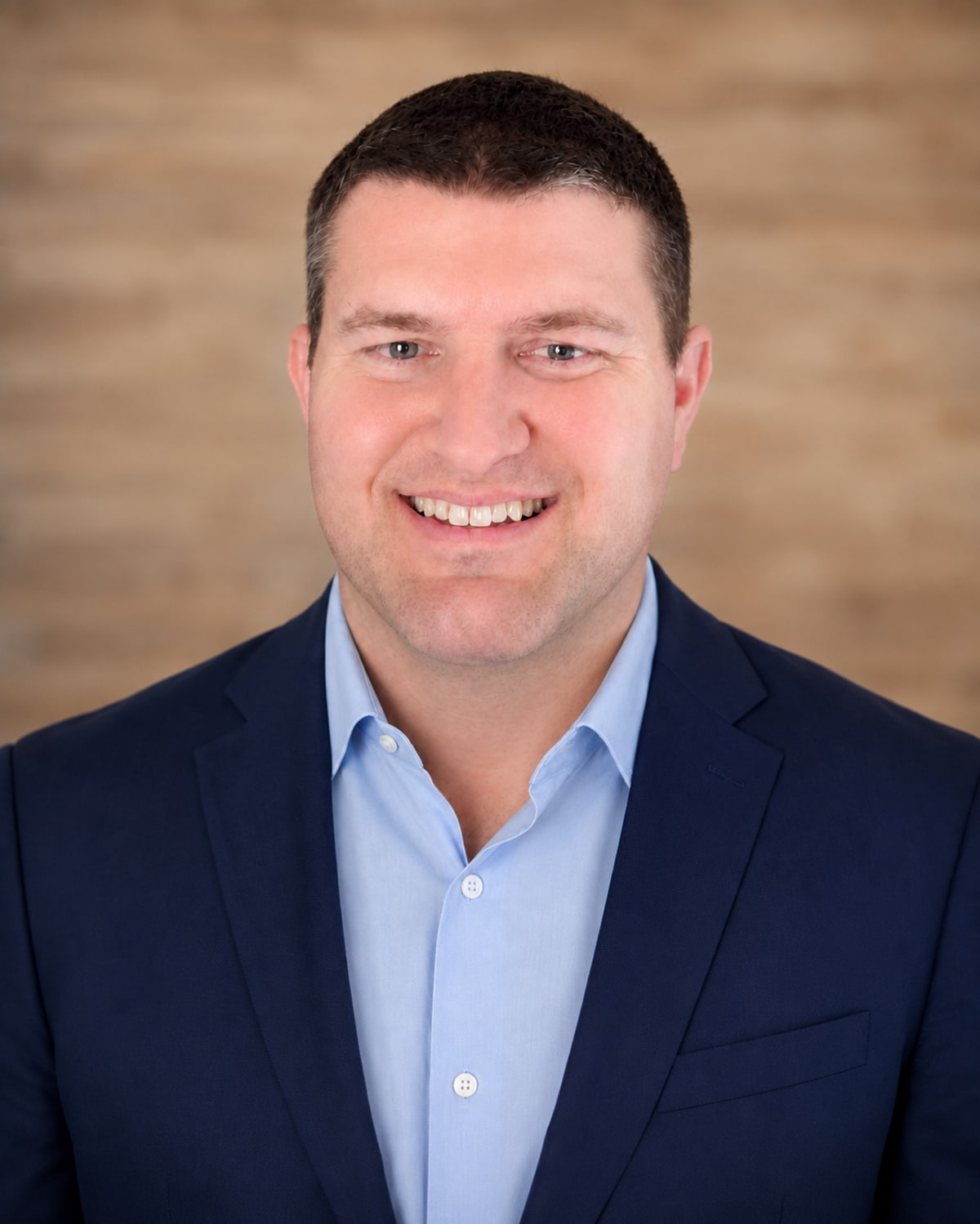
I started in the military, serving across multiple units in both the Marine Corps and the Army — special operations capable in the former, psychological operations in the latter. That is where the operating discipline comes from: plan against the constraint, rehearse the contingency, and accept that a decision made late is usually worse than a decision made imperfectly on time.
From there I traded equities and derivatives. Trading is an unforgiving education in one specific skill: pricing risk in real time, when the information is incomplete and the market will not wait for you to finish thinking.
The next decade moved that judgment into private companies. As a Director at Trinity Private Equity Group I participated in portfolio company oversight, capital formation, and M&A — including asset dispositions and bankruptcy transactions, which is where you learn what a balance sheet is really worth. Later, as Director of RGL Forensics' Dallas office, I led transaction and corporate advisory work in the middle market, under $500M, where forensic analysis and deal execution sit in the same file.
Alongside all of it, I have been building companies of my own. I am a serial entrepreneur and have founded five companies — which is a different education again from advising them. Founders carry things advisors do not: payroll that has to clear, hires made on incomplete information, a forecast with your own name on it, and the direct consequence of every go-to-market decision.
Today I invest and advise through Lorica Capital, and I run Gambit GTM, an operator-led revenue consulting firm built for owner-operated and PE-backed businesses growing from founder-led selling into a scalable engine. I hire the commercial roles the model requires, set comp and territory, and run the team — pipeline reviews, deal inspection, forecast discipline, performance management — until the cadence holds on its own.
In the military, the fog of war is the plain reality that you rarely have complete information. Conditions shift, intelligence is partial, and waiting for certainty is frequently more dangerous than acting on what you have. Leaders do not succeed because they know everything. They succeed because they understand the intent, trust their people, and move decisively inside the ambiguity.
Business is the same problem wearing different clothes. Markets move, the data is imperfect, priorities compete, and disruptions arrive unannounced. Waiting for clarity costs momentum. The job is to manufacture enough clarity that people can act — and enough trust that they will act boldly when the path is not fully visible.
Seven principles do most of the work. Three govern how a decision gets made and executed. Four govern the conditions it lands in.
Marine Corps — Deciding and moving when the information is incomplete.
Momentum comes from action, not analysis. A timely decision made on 70% of the facts almost always beats a late one made on 95%, because the 30% you were waiting for usually arrives after the window closes.
Agility and unconventional thinking create more advantage than scale does. Most competitors are running the obvious play; the opening is in what they are not defending.
In the Marines this is called violence of action. Once the decision is made, execution is unified and disciplined. Decisiveness means committing fully to a well-grounded choice — not reacting emotionally at the last minute, and not hedging the commitment until it fails quietly.
Army Psychological Operations — Creating the conditions in which the right decision is the natural one.
Trust is the center of gravity. Credibility creates alignment; consistent communication maintains it. Lose either one and every subsequent decision costs more to implement than it should.
Before action begins, shape the psychological terrain — the expectations, narratives, and mental models that determine how people will interpret what happens next. Set the frame and you set the pace. Define the story and you define the standard. The desired outcome becomes the natural path through clarity and coherence, not force.
Influence starts with what actually motivates people: their fears, aspirations, incentives, and values. The same decision lands or fails depending on whether it was framed against what matters to the person receiving it.
Simple, coherent messaging cuts through noise. In an uncertain environment, clarity is not a communications nicety — it is what reduces friction and accelerates action.
We will never have complete information. We can still create clarity of intent, build trust, shape the environment, and empower decisive action — and move with purpose in the fog.
It started at home. My dad sold for Radio Shack and later for a computer company, where my first real job was in the warehouse — unloading components off an 18-wheeler, assembling them into finished computers, and loading them back onto the truck. My mom was a marketing executive at EDS. Sales on one side, marketing on the other, and me in the middle building the product with my hands. I've been working that triangle ever since.
The rest of the family widened the picture. A stepfather who left an engineering career at Lockheed Martin to become a psychologist showed me what reinvention looks like up close. One uncle was a plastic surgeon, another a pharmacist — in them I saw the results of dedication to a singular cause. And several aunts taught me the thing no credential does: kindness and care are what connect people.
The first business was mowing lawns in high school — there have been five real companies since.
One of them came from the oldest fantasy a Texas kid can have: I wanted to be a cowboy. So I became one, more or less — I took over a vacant facility and built an organic dairy of more than 2,000 cows, at the time one of the largest in the country, running 24/7 regardless of weather or conditions. The day I started, I thought brown cows made chocolate milk. The gap between what I knew and what the work required closed the only way it ever does: from the ground up.
That's how I've learned most things. I wanted to sail, so I took a job as a janitor at a yacht club; that mop bought a sailing education that eventually carried me through the Baja Bash. I wanted to be around race cars, so I worked as a tire mechanic for a dirt-track team; later I built a 1970 Nova drag car and a Factory Five 1965 Shelby Daytona coupe in my own garage.
The military taught me to climb rock and traverse glaciers. I kept climbing after: the Needles, Joshua Tree, the limestone in Thailand, the granite in Yosemite.
Along the way I've had the good fortune to live in Japan, to travel throughout Asia and Central America — Honduras and El Salvador in particular — and, best of all, to raise two amazing kids.
All of it is one habit: start at the bottom of a thing, learn it honestly, and build something with it. It's the same habit I bring into companies.
Go-to-market work — diagnosis, revenue operating system design, the build, and standing up and leading the execution team — is delivered through Gambit GTM, where it has a defined methodology and a bench. Restructuring, governance, and forensic mandates I take directly.
The fastest way to find out whether there is a fit is a direct discussion about the situation in front of you.